The Encyclopedia of Horror

Psychological Killer
One of the more terrifying monsters, the psychotic killer is usually based entirely in the real world. Sub-genres from the thriller to the slasher have relied on the evil or madness of a vicious perpetrator or elicit their thrills. Sometimes they are given an excuse or reason for their actions - whether it be abuse at the hands of the father (Peeping Tom) or a frightening oedipal complex ( Maniac Psycho) In these cases the audience may not be able to identify with the monster - but can at least understand it.
Occasionally there is no obvious cause or explanation for a killers crimes (Henry, Portrait a Serial Killer) or sometimes its the chilling motivation of someone wanting simply to know how it feels to kill ( The Sailor who fell from Grace with the Sea Spoorloos )
Horror/Slasher Films (ask Alex for name of book)
Ten Things to Avoid
A paranoid guide to surviving a slasher scenario
1) Asking stupid questions. Top on any survivors list. If you find yourself having to ask the question ''whos there?'' in a darkened environment, the chances are that you really don't want to hang around for the answer.
2) Snapping twigs. Usually a preamble to certain death.
3) Windows. Anyone near a window will either end up dragged through it or have something dead thrown through it at them.

6) Telephones. You'll be cut off mid sentence. Or someone will strangle you with the cord.

7) Bathrooms, showers, toilets. Humans are generally at their most vulnerable when naked. Likewise, outside toilets with thin walls, allowing pointed objects to be thrust through them. Inside toilets usually have a nasty habit of concealing severed heads. When told that Psycho had deterred one viewers wife from ever showering again - Hitchcock suggested he sent her to be dry cleaned.
8) Playing practical jokes. No one ever finds them funny and they usually backfire resulting in bloody revenge four, six, ten years later.
9) Drugs, rock music and premarital sex.
10) Finally...Always give a wide berth to any kind of anniversary or significant date on the calender, hospitals with no patients, boiler rooms, basements and heavily wooded areas.

Filmmakers often use a scary human character to be a typical element.
In some movies, the character wears scary clothes and a mask as he commits the murders. These movies always have a plot about a group of teenagers getting killed by a murderer one by one. People dont know the reason why the teenagers get killed until theres a revelation of the murderer in the end of the movie.
During the time the audience is watching, it also anticipates who the murderer is, and it is always incorrect. There are also conflicts at the end of the movies, which surprise people a lot, and most of these conflicts are related to revenge.
For instance, in Scream (1996), a murderer wearing a scary mask has already been used as a typical horror element in the trilogy of this series. The murder of this movie starts one year after Sidneys mothers death. Sidney is one of the main characters who are teenagers, and a murderer wants to kill only this teenage group. Therefore, there is something related between this teenager and Sidneys mothers death. A conflict, including the revelation of the mysterious murderer, is revealed in the end of the movie.

There are many horror/suspense movies which have a plot similar to Screams plot such as I Know What You Did Last Summer (1997), Urban Legend (1998) and Valentine (2001). Not only does revenge lead to murder, but there are also movies in which murder comes from a person who has mental disorder.
For example, in Psycho (1998) They find that the owner of that motel, a person who has a mental disorder, is the person who has killed her. There are also other horror/suspense movies in which a person who has mental disorder is a murderer such as The Dentist (1996).

OMG HORROR

Boat/Ocean -You have the claustrophobia, the isolation, the vast unknown of a surrounding ocean, and of course, whatever is lurking in the waters. The fear lies in inescapability, the utter vulnerability the characters endure throughout the film. Such (at sea) scenarios create suspense, and it’s the mounting tension that becomes a large part of the narrative. It’s not just the startles and frights that is so instrumental to the terror, it’s often all about the build up and ultimate payoff.
Best Example: Jaws
 Carnival – Carnivals, fairs, boardwalks – all of them have horror potential. Clowns, mascots, mimes, the darkness, the weird flashy lighting, the exotic rides and games. Not only are the settings in such films intrinsically fun, an interesting counterpoint is usually derived. To set a horror film in a typical place of fun and excitement, you’re sort of tricking the audience into a false sense of security. Expectations are flipped, and what may seem like a good time often ends in brutal, sadistic carnage, a good juxtaposition.
Best Example: The Funhouse

Cemetery/Graveyard –Gravesite horror has been around for years, so it comes as no big surprise such locations anchor horror flicks. Really, what could be more basic and primal, at the same time so effective in its eeriness. Whether it’s Nosferatu or Coffin Joe, or a blood-parched zombie battalion rising from the soot, graveyard/reanimation horror, in all its forms and fashions, remains quite supreme.
Best Example: Night of the Living Dead


Desert – Hot, humid, barren - the desert can often be no picnic. The level of unsustainable living should raise immediate flags, so to catapult a horror story into a desert setting, you’re already pushing the envelope. You’ve got the blinding sun, lack of water, the swirling vultures, even the cacti look to cause some major damage. Like the ocean or outer space scenarios, most of the desert terror derives from isolation and the inability to escape to safe ground.
Best Example: Tremors
 Hospital – Terrorized in a place that is supposed to save lives. In a place that is solely in existence to preserve life. If you can’t trust doctors, who can you trust. That is the common thread stitched throughout most hospital horror. A clean, sterile environment often becomes sullied by blood in a way that not only makes you uncomfortable, but in a way questions why we go to hospitals in the first place. The best examples also call to question the abuse of medical authority and test the credence of a doctor/patient privilege. Ghastly medical tools and equipment conjures the greatest fear.
Best Example: Dead Ringers

Best Example: Psycho

Jungle – Dense, exotic, mysterious – the jungle can be frightening enough, sans a horror story. Survival alone is a hard, staying clear of deadly poisonous snakes, bugs, spiders, plants, water sources, etc. is no easy task. Then add the element of tribalism, savage cannibalism, ritual sacrifice and the like. The best films of this ilk shoot entirely on location and capture the true mystique of nature’s peril.
Best Example: Cannibal Holocaust

Best Example: Dawn of the Dead (1978)

School/Classroom –When done right, horror flicks set in the halls of a school can be very effective. You’ve got the punk students, tyrannical teachers, inclement principals – all people we can usually root to get their pretty little heads lopped off. And little cheerleaders get their comeuppance. Because most horror films encourage the night time, not enough well made school-set examples can be enumerated. Eg. Megan Fox film Jennifer’s Body.
Best Example: Carrie

Spaceship/Station – Much like the ocean, exploring the uninhabitable can be terrifying. Think about how haunting the spare, desolate images of the universe we saw in a flick like 2001: A Spacey Odyssey, a non-horror film. To throw in a horror premise, you get a blend of both visceral terror and psychological uncertainty. Also, being confined to a spaceship or space station stops you from being able to break for a safe escape, making for an even more restless experience.
Best Example: Alien

Summer Camp/Cabin – Some of the best horror films (in the slasher subgenre) have taken place at a summer camp/cabin. When you’ve got a load of young teens, alone, away from home, welcomed by the serene beauty of nature, only to be savagely interrupted by some psycho with a penchant for blood – you’ve got a simple yet effective horror delight. Summer camp/cabin horror is no doubt bound to persist.
Best Example: Friday the 13th

Theater – (or opera house). First off, a theater is dark, amply filled with potential victims, and perhaps most importantly, has a physical proximity meant for mass chaos and confusion. A killer can fell a person and easily mingle in the crowd as to avoid being seen. A theaters geographic confinement plays to the claustrophobic nature, thereby culling true suspense.
Best Example: Demons
...................................
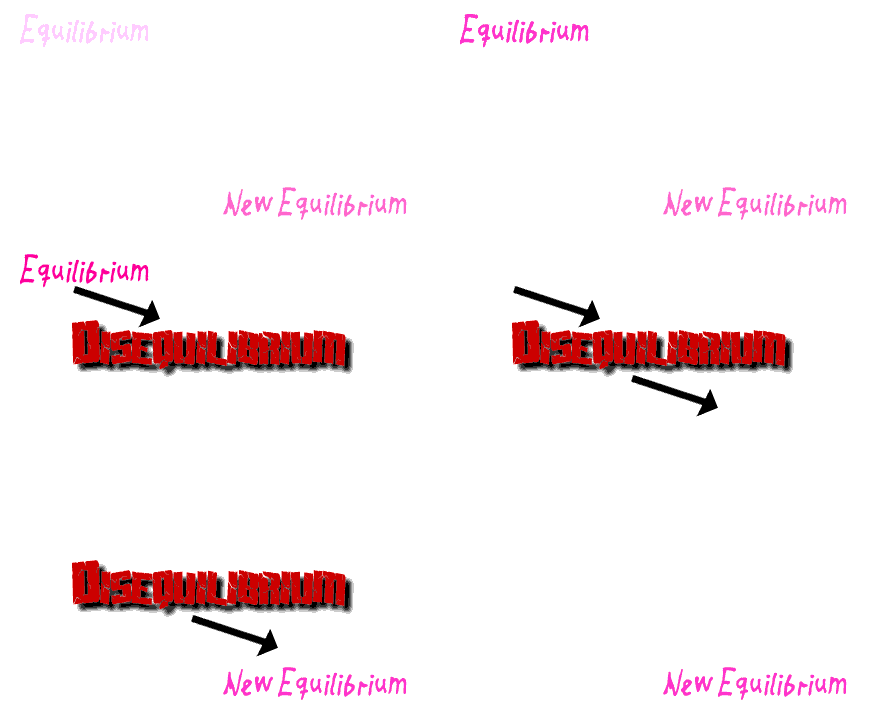
Scream does follow Todorov's Narrative theory, as it has an equilibrium, then a dis-equilibrium, then a new equilibrium. Although the equilibrium only lasts a few minutes in this film, there is still one present. the equilibrium being that the blonde woman is happy, and about to spend a nice evening with her boyfriend.
The equilibrium is broken when the killer rings her up, and she sees that her boyfriend has been tied up. Scream has an equilibrium at the end as the killers are killed, and the remaining survivors are happy. Although Scream follows the typical narrative theory, many horror films don't. Typically in a horror film there is an equilibrium just before the end, but then just when everyone thinks they are safe, the killer returns and there is a new dis-equilibrium. This is typical of a horror film, as its supposed to shock the audience and make them feel uneasy.
- ARISTOTLE'S UNITIES - Perhaps the first 'narrative theory' as such. A narrative should be created within a 'unity' of time, place and action - that is, it should all take place in the same location, in real time, and with all action moving towards a logical (and moral) conclusion.
- TODOROV’S THEORY – Todorov proposed a basic structure for all narratives. He stated that films and programmes begin with an equilibrium, a calm period. Then agents of disruption cause disequilibrium, a period of unsettlement and disquiet. This is then followed by a renewed state of peace and harmony for the protagonists and a new equilibrium brings the chaos to an end. The simplest form of narrative (sometimes referred to as ‘Classic’ or ‘Hollywood’ narrative).
- PROPP’S THEORY –Vladimir Propp’s theory was formed in the early twentieth Century. He studies Russian fairytales and discovered that in stories there were always 8 types of characters evident. These are: the hero, the villain, the donor, the dispatcher, the false hero, the helper, the princess and her father. He did not state these characters were all separate people e.g. the provider could also be the helper. There are only 8 different character types and only 31 things they ever do. Once you have identified the character type (e.g., the hero) it’s easy to guess what they will do (save the maiden, defeat the villain, marry the maiden or whatever) because each character has a SPHERE OF ACTION. This is easily relatable to films and programmes today.
The legacy of blood
-first person point of view shot featured heavily in halloween to give the impression someone in being watched, and to create tension.
-The presentation of images of sex and death remain the primary function of slasher movies.
-Prom night use the hand-and-glove shots that indicate the killers presence in the opening scenes of several gialli.
-Halloween has many references to Argentino's films- the continuous point of view shot, and the contrast between moonlit blue and the yellow glow from the artificial outside light.
-Friday 13th sequels appropriated Argentino's flair for using everyday household objects as murder weapons.
-Black christmas is another film which relies heavily on point of view shots.
-In slasher movies the killer always ( or at least appears to be ) alone to create suspense.
-Traditional haunted house/ demonic posession affairs such as poltergeist used, often to bring the heroine against antagonists from another dimension.
-Horror films are mostly focused on groups of teens for the victims.
-Nightmare on elm street- significant horror decade, the origin of this film lies in newspaper articles that caught the director Cravens eye. It was about a series of bizarre deaths. Victims had claimed to be suffering from intensly terrifying dreams, fearing their lives refused to go back to sleep. And when they did, they died in their sleep.
-Modern horror has come to rely so heavily upon the idea of a teenage heroine. Carol Clover in her book 'men, women and chainsaws' calls it a 'final girl' - a hero in the masculine mode, despite being female. All final girls share some basic characteristics - intelligent, smart and resourceful.
-The aspects of the films that stick in the audiences mind are invariably the weapons and equipment used by the relevant psychopath.
-Killers are mostly always male, and can be divided into 2 categories.
The first being...Evolutionary throwbacks-
somehow 'incomplete' human beings who lack necessary qualities that seperate man from animal. They rarely speak and their movements tend to be uncivilised. For example - Freddy Kruger inNightmare on Elm Street
The second is 'normal' human murderers-
articulate and agile, and tend to bare no physical disfugurement that could prevent them from mixing with civilised society, which is usually to their greatest advantage as it allows them to avoid detection until last minute. For example - Michael Myres from the film Halloween.
- It is also typical that the killers are 'silent' killers, such as Jason Voorhees, Michael Myers or Freddy Kruger, creating more suspense.
-It is usually only in the last 15 minutes of each film that a human face is given to the evil deeds. Keeping the suspense going until the very end.
-The killers are almost exclusively male, Pamela Voorhees from friday 13th is the most famous example of a female killer.
-Killers tend to carry out their murderous designs in urban settings.
-The murderers are often given a background rooted in sex or gender related trauma, making them slightly abnormal, and so creates a much creepier, scarier effect to watch when you know they have inhuman characteristics.


good, but i'd like to see more precise detail on typical locations, narratives, characters/representations etc
ReplyDelete